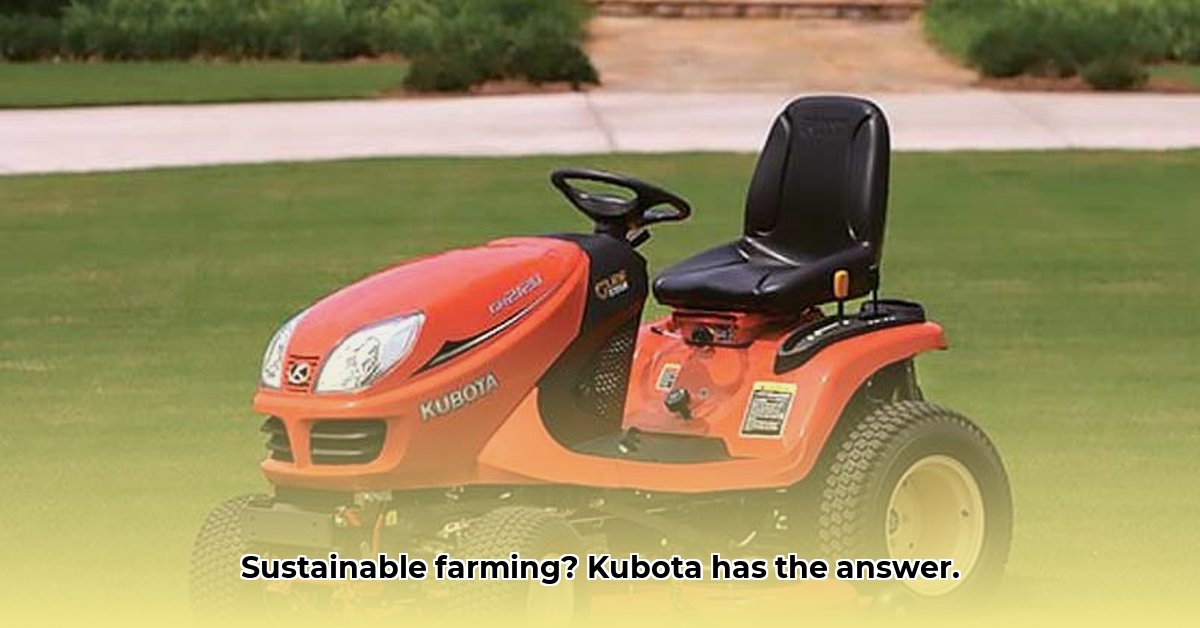
Sustainable agriculture is no longer a niche concept; it's a necessity for feeding a growing global population while preserving our planet. Technology plays a crucial role, and Kubota, a leader in agricultural machinery, is at the forefront of this revolution. This article explores how Kubota tractors and mowers contribute to sustainable farming practices, focusing on precision farming, carbon sequestration, and automation. For detailed Kubota tractor parts diagrams, check out this helpful resource.
Precision Farming: Optimizing Resource Use
Precision farming maximizes efficiency and minimizes environmental impact by precisely targeting resource application. Kubota tractors, equipped with GPS guidance and advanced sensors, allow for the efficient distribution of fertilizers, pesticides, and seeds. Imagine a farmer applying fertilizer only where needed, eliminating waste and reducing the risk of chemical runoff into waterways. This targeted approach not only saves money but also protects the environment.
How does this translate to real-world benefits? GPS-guided Kubota tractors ensure consistent coverage, minimizing overlaps and reducing fuel consumption. Soil moisture sensors provide real-time data, enabling farmers to irrigate only when necessary, conserving precious water resources. Variable-rate technology (VRT) further refines this process, tailoring resource application to specific field needs based on soil analysis and crop health. This level of precision significantly reduces the environmental impact of farming inputs, minimizing chemical runoff and promoting more sustainable practices. Isn't it remarkable how technology is allowing for such targeted and environmentally responsible farming?
Carbon Sequestration: Farming for a Healthier Planet
Healthy soil is essential for carbon sequestration – the process of capturing and storing atmospheric carbon dioxide. Kubota tractors facilitate practices that enhance soil health and carbon storage. No-till farming, enabled by the precise control offered by Kubota equipment, leaves crop residue on the field's surface, protecting the soil from erosion, improving water retention, and significantly reducing carbon emissions. This method improves soil structure, increasing its capacity to store carbon. It's a fundamental change with significant, long-term environmental benefits.
Cover cropping, another technique supported by Kubota's compact tractors, involves planting cover crops between main crops. These crops add organic matter to the soil, boosting its ability to sequester carbon and improving its overall health. While the precise carbon sequestration potential of these methods is still under scientific investigation, the benefits of improved soil health and increased carbon storage are undeniable. Are farmers ready to embrace these sustainable methods that also benefit the planet?
Automation and Labor Optimization: Balancing Efficiency and Sustainability
Large-scale farming often demands significant energy consumption. Kubota's automated systems, integrated into mowers and tractors, drastically improve fuel efficiency by minimizing idle time and unnecessary movements. This translates to lower fuel costs, reduced greenhouse gas emissions, and a considerably smaller carbon footprint. The reduction in fuel consumption alone makes a significant contribution to environmental sustainability.
Furthermore, automation helps address the growing challenge of labor shortages in agriculture. Autonomous tractors can work extended hours, increasing productivity without increasing labor costs. This frees up human workers to focus on other critical tasks, enhancing overall efficiency and sustainability. While the shift towards automation raises some concerns about job displacement, the increased efficiency and sustainability benefits are undeniable. Is the agricultural sector prepared for this technological transformation in labor practices?
Kubota's Commitment to Sustainable Agriculture
Kubota's commitment to sustainability extends beyond individual product features. The company actively invests in research and development, continually striving to create equipment that minimizes environmental impact while maximizing efficiency. Their dedication is evident in their ongoing efforts to reduce their manufacturing's carbon footprint and improve the operational efficiency of their products. Kubota also supports sustainable agricultural practices through training programs and partnerships with agricultural organizations. The company aims to help farmers adopt sustainable methods, contributing significantly to the broader agricultural ecosystem.
Challenges and Opportunities: A Collaborative Path Forward
While significant strides have been made, challenges remain in widespread adoption of sustainable agricultural practices. The initial cost of adopting new technologies can be a barrier for some farmers, highlighting the need for increased financial support and educational resources. However, the long-term benefits, including reduced operating costs and increased productivity, significantly offset the initial investment, driving the transition towards sustainable methods. Collaboration among manufacturers like Kubota, farmers, policymakers, and researchers is crucial in fostering a truly sustainable future for agriculture. Are we adequately addressing the socioeconomic barriers to transitioning to sustainable agriculture?
The future of farming necessitates a proactive approach to sustainability. By embracing innovation and integrating sustainable practices, we can create a food system that nourishes both people and the planet. Kubota's commitment to technology and sustainability is a significant step in this process. The pathway forward requires consistent effort, collaboration and a shared commitment to a more environmentally conscious future for agriculture.